
How Much Does Food Photography Cost in London? A Straight-Talking Guide
“How much does a food shoot cost?” is the first thing I get asked. “It depends” is the honest answer, and also the most annoying one, so here’s what actually goes into the price. It’s written for brand and marketing managers, start-up founders and agency producers who want to budget properly and avoid nasty surprises on the invoice.
The short answer
As a rough guide, a good commercial food photographer’s day rate is around £3,500, plus usage and production costs. An out-of-home (OOH) billboard shoot starts from around £10,000 once you add the crew, set, styling and usage a campaign like that needs.
You’ll find cheaper options. Restaurant and menu photographers in London publish packages from a couple of hundred pounds up to around £1,000 for a day, but that’s a different job: shooting dishes as they are, for menus and socials. A packaging or advertising shoot is a production, and the photographer’s fee is just one line in it.
What actually drives the cost of a food shoot
1. The number of shots and set-ups
The biggest factor isn’t the number of final images. It’s the number of set-ups. Every time the background, lighting, props or angle changes significantly, that’s a new set-up, and each one takes time to build, light and style.
A packaging range on one consistent set moves quickly. Ten different hero shots, each with its own set, don’t. Tell me how many images you need and where they’ll run, and I’ll tell you how many days that really is.
2. Food styling and home economists
A specialist food stylist or home economist is the difference between “nice” and “I need that now”. They usually charge for the shoot day plus prep and shopping days, with ingredients on top. Cheese pulls, ice cream and perfect burger builds take skill, spare product and time.
3. Prop styling
Plates, surfaces, cutlery, that perfectly battered vintage tray: someone has to source it. A prop stylist does that. On smaller shoots I can pull from my own prop and background store to keep costs down.
4. Set builds
Bold, graphic work often means building coloured sets, plinths and the occasional ridiculous contraption. Set builders and materials cost money, but this is where an image goes from generic to unmistakably yours.
5. Studio hire
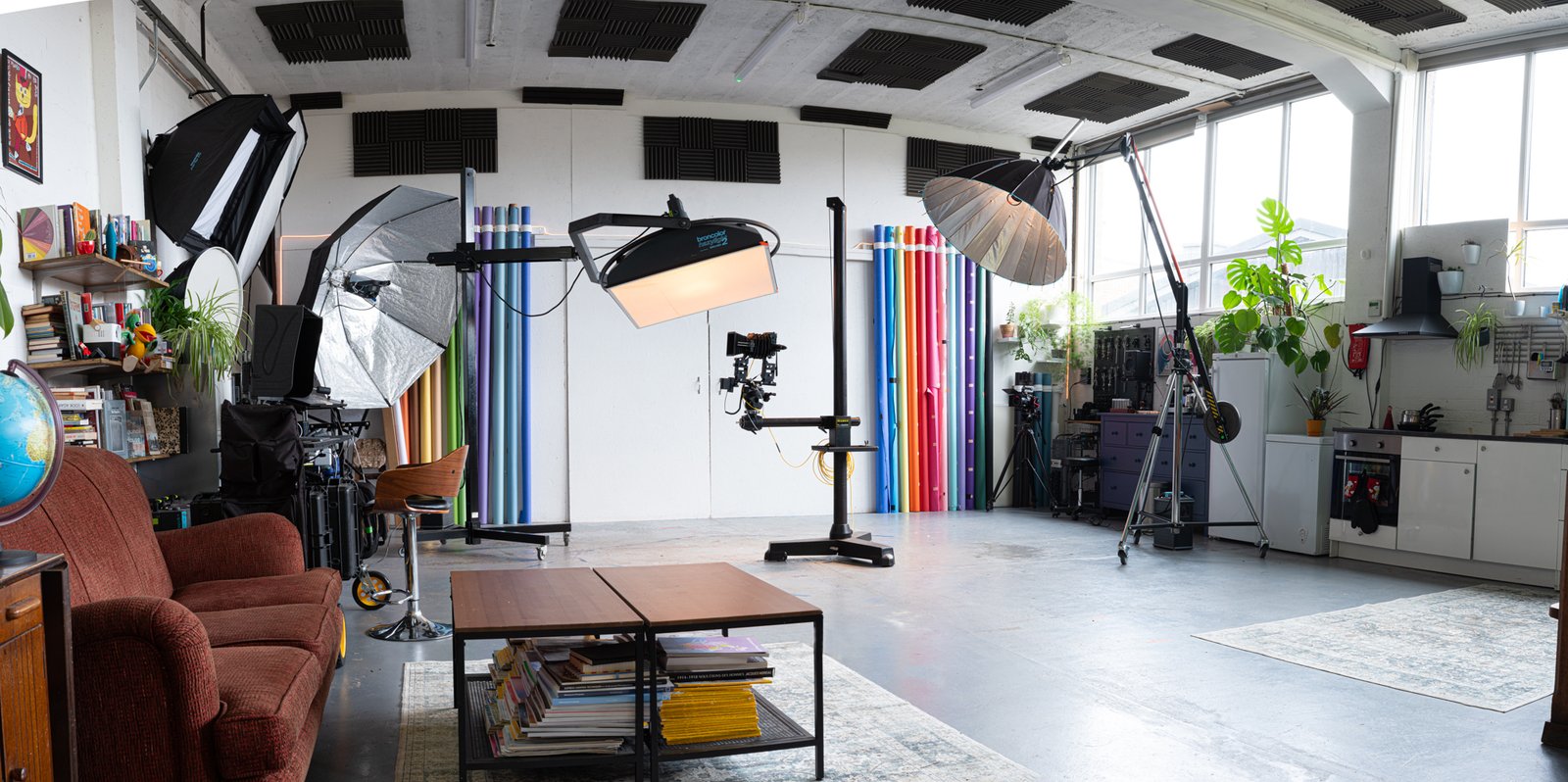
You need a space with a kitchen, the right lighting and room for a crew. I work from my own food and drink photography studio in London and my photography studio in Leicester. On my site, the Leicester studio lists from £250 for a half day and £450 for a full day for hire.
6. Crew
A shoot might need an assistant, a digital tech, a producer, and for motion a DOP and camera crew. A start-up social day might be me and an assistant; a national campaign needs a full team. Crew is where budgets scale fastest.
7. Motion and video
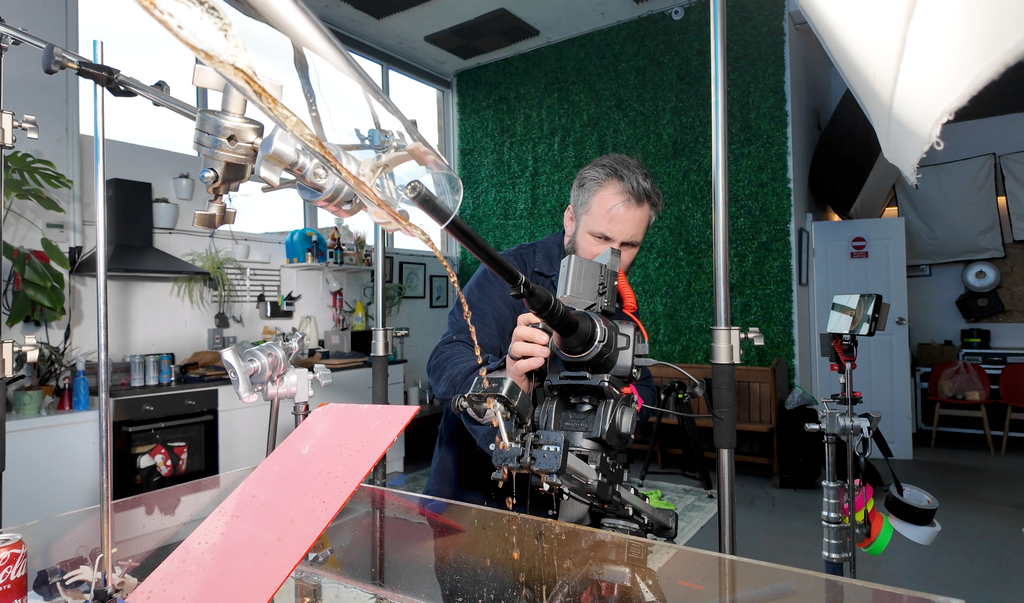
Adding video on the same day, with the same set and styling, is great value. It still adds time, kit, crew, editing and grading, and slow motion and motion control add more. I shoot food and drink video alongside stills, and I offer motion control for repeatable camera moves when the brief calls for it.
8. Retouching and post-production
Every commercial image is retouched, and packaging and OOH work needs the most. It scales with complexity: a clean pack shot is quick, a composite of several plates isn’t.
9. Usage and licensing
This is the bit that confuses people most. In the UK you don’t normally “buy” the photos outright; you license them. Usage covers three things:
- Duration: how long you can use the images, for example one year or two years.
- Territory: where you can use them, for example the UK only, Europe or worldwide.
- Media: what you use them for, for example social, website, packaging, press, point of sale, OOH or TV.
The Association of Photographers’ guidance says the original fee normally includes one year in the UK (or another single country) across two media, or two years across one media. Wider, longer or bigger usage costs more. A national billboard is worth more than a post on your own Instagram, so it’s priced accordingly. Share your media plan upfront and the quote will be right first time
Agency-produced vs direct shoots
Agency-produced shoots. These involve more people (art directors, creatives, agency producers, often an art buyer), broader usage, more approvals and bigger productions. The agency’s own fees sit outside the photographer’s quote. I’m used to working this way, and I’ve written more about how I work with advertising agencies.
Direct shoots. Brands and start-ups can come straight to me or to my agent at Agent At Large, who handles budgeting, scheduling and production. Fewer layers means faster decisions and more of the budget on the pictures. It’s ideal for packaging, social content and challenger brands who need to look bigger than they are.
How to get the most from your budget
- Brief properly. Share references, shot lists, where the images will run and your deadline. Vague briefs cost money on the day.
- Batch your shots. Group similar shots onto the same set so we’re not rebuilding every hour.
- Shoot stills and motion together. One crew, one set and one day of styling, with two sets of assets.
- Plan usage honestly. Don’t pay for worldwide TV if you need UK social. Don’t under-license and then need to renegotiate later, either.
- Ask what’s included. A good quote spells out the fee, usage, crew, studio, styling, retouching and expenses, so you can compare like with like.
Example shoot types (and what to expect)
Social content day
Scroll-stopping stills and short clips for your channels, with a lean crew, simple sets and plenty of output. As a guide, start from my day rate of around £3,500, plus usage and production costs such as styling, props and studio. See my social-first food content for the style.
Packaging range
Consistent hero shots across a range of products. Accuracy and repeatability matter here, and so does retouching. Packaging is a media in its own right for usage, and the cost depends on the number of SKUs, set-ups and retouching, on top of the day rate. [placeholder: optional typical range or per-SKU guidance]
OOH campaign
Billboards need imagery that holds up at enormous sizes, which means a full production: set builds, specialist styling, crew and heavy retouching. An OOH billboard shoot starts from around £10,000, with usage depending on how long and where the campaign runs. My Cathedral City national billboard campaign is a good example of this kind of production.
Stills plus motion
Hero stills and video from the same shoot. It adds motion crew, kit and editing, but saves a whole second production. Budget from the day rate upwards, with motion crew, post-production and usage on top. So, what should you budget?
Start from a day rate of around £3,500 plus usage and production, and from around £10,000 for OOH. You’re paying for a team that makes your product the most appetising thing in the aisle, on the feed or on the side of a bus. For a proper number, get a quote for a high-end food shoot, or see the high-end commercial food photography I shoot for brands and agencies first.
Ready to talk budgets?
Tell me about your product, your deadline and where the images need to work, and I’ll give you a straight answer on cost.
- Scott Choucino: scott.c@scottchoucino.com | +44 (0)784 3091419
- Agent: Pete Gearing, Agent At Large: peter@agentatlarge.co.uk | +44 (0)7771 941315
- Producer: Brendan Hayes: Brendan@productionatlarge.co.uk
Or head to the contact page, or see more of my commercial food work.